
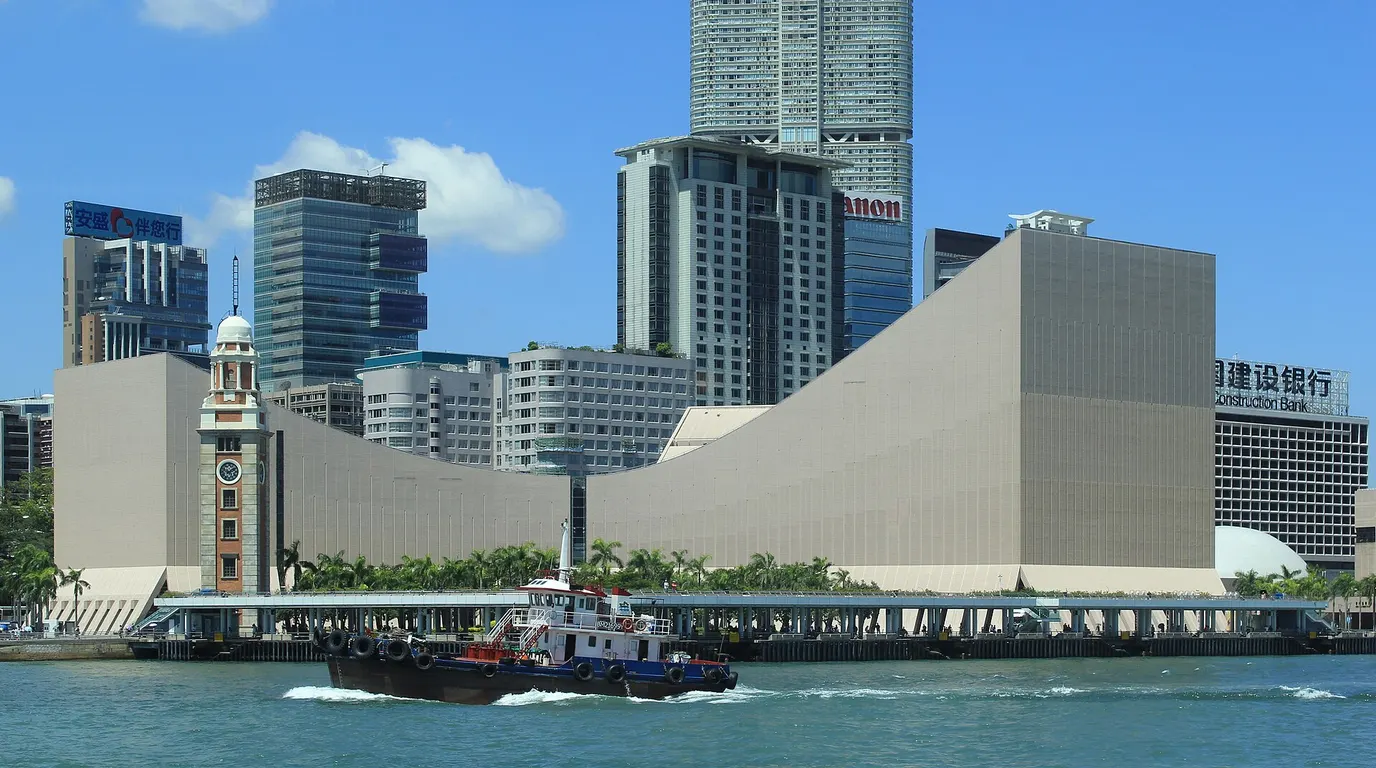
 © Ralf Roletschek · CC BY-SA 3.0
On this page
Why Hong Kong?

Advantages
- Familiar language and daily lifeCantonese, Chinese and English all work, family and friends are close, and daily life needs little adjusting.
- Routes that need no job offerThe TTPS and QMAS let you come first and find work or start a business; the GEP suits people who already have an offer.
- A simple, low-tax systemSalaries tax tops out at 17%, or the 15% / 16% standard rate; only Hong Kong-sourced income is taxed, with no capital gains or inheritance tax.
- Permanent residence after 7 yearsAfter 7 years of continuous ordinary residence you can apply for permanent residence.
Worth weighing up
- High housing costsRents and property prices are high; budget for housing before you come.
- Extensions need a job or businessMost routes need proof of employment or a business, and ordinary residence in Hong Kong, at each extension to count towards the 7 years.

Who is it for?
- You want Hong Kong as the base for your family's wealth and investments
- You want residence and schooling for your children without working in Hong Kong
- You want to set up or expand a family office in Hong Kong
- You want Hong Kong permanent residence after 7 years
Key facts
- 1How you qualify
- Foreign nationals, Chinese nationals with foreign permanent residence, or Macao or Taiwan residents (not mainland residents)
- 18 or over, with HK$30M net assets held for the 6 months before applying
- HK$30M in permissible investments, HK$3M of it in the CIES portfolio
- No need to work or run a business in Hong Kong
- 2Family who can come
- Your spouse or civil partner
- Unmarried dependent children under 18
- 3Settlement and passport
- Permanent residence: 7 years' ordinary residence; holding the investment alone is not enough
- Extensions: keep the investment in place
- Passport: Chinese citizens can apply for an HKSAR passport once they are permanent residents
- 4How long it takes
Invest
Within 180 days
Permanent residence
Year 7
HKSAR passport
After PR
✓ Facts checked: 1 Nov 2026
Latest developments
Financial assets must go through designated accounts
For Net Asset Assessments filed on or after 1 November 2026, financial assets bought through non-designated accounts no longer count, and transfers into designated accounts are not accepted.
Residential threshold cut to HK$30M
For residential purchases completed on or after this date, the single-transaction threshold fell from HK$50M to HK$30M, and the total real estate that counts rose from HK$10M to HK$15M (residential still capped at HK$10M).
Net assets need holding for 6 months, not 2 years
Applicants now need HK$30M of net assets held for the 6 months before applying (2 years before); jointly held family assets count for the applicant's share; and investments through a wholly owned Hong Kong holding company managed by an eligible single family office also count.
Source: InvestHK — Details of enhancement measures for New CIES (7 Jan 2025)
Residential property counts for the first time
The 2024 Policy Address allowed residential property to count from this date, provided each property cost at least HK$50 million, within a HK$10 million cap on all real estate.
Source: Hong Kong Government — Enhancement measures on New Capital Investment Entrant Scheme (16 Oct 2024)
New CIES opens
The scheme opened for applications, requiring at least HK$30 million of permissible investment in Hong Kong, including HK$3 million in the CIES Investment Portfolio. Applicants and dependants get two years at first, then three-year extensions.
Source: InvestHK — New CIES opens for application from March 1 (1 Mar 2024)
The old CIES is suspended
The original scheme, launched in 2003 with a HK$10 million threshold, stopped taking new applications. The new scheme raised the threshold to HK$30 million.
Source: Hong Kong Government — LCQ8: Capital Investment Entrant Scheme (12 Dec 2018)
- Assets held jointly with family count for the share you absolutely own
- Lawful, documented source of funds
- Assets bought before the scheme launched (1 March 2024) do not count towards the investment
- Not open to nationals of Afghanistan, Cuba and North Korea; stateless people with foreign permanent residence and re-entry rights can apply
Family members who can be included
| Family member | Condition |
|---|---|
| Spouse or civil partner | The marriage or civil partnership (same-sex included) must be recognised where it took place; de facto partners and fiancés are not covered |
| Children | Under 18, unmarried and dependent |
Process and timetable
6 months before
Hold the net assets
You must have held net assets of at least HK$30 million throughout the 6 months before applying.
Step 1
InvestHK checks your net assets
Submit proof of net assets to the New CIES Office. Once approved, InvestHK issues a confirmation that must be used to apply to the Immigration Department while valid.
Step 2
Approval in principle
The Immigration Department approves in principle; you can then visit Hong Kong for up to 180 days to make the investment.
After approval in principle
Make the investment
Invest HK$27 million in permissible assets through a designated account and place HK$3 million in the CIES Investment Portfolio.
Step 3
Investment checked, visa granted
Once InvestHK confirms the investment, the Immigration Department grants the visa, normally for up to 24 months.
After that
Extend your stay
Each extension is normally for up to 3 years; InvestHK checks before each one that the portfolio still qualifies.
Year 7
Unconditional stay and permanent residence
At the end of year 7 you can apply to stay without conditions once all 7 years are verified; if you have ordinarily resided for 7 continuous years you can apply for permanent residence.
Document checklist
Net asset assessment (to InvestHK)
- A fulfilment document from a practising certified public accountant you engage at your own cost, with every supporting document it lists
- A Net Assets Statement
- Apply within 14 days of the accountant's document being issued
Investment assessment (to InvestHK)
- A practising accountant's fulfilment document and supporting documents
- A Permissible Investment Assets Statement and the online application form
| Source of funds | Proof needed |
|---|---|
| HK$30M in net assets | Held with absolute beneficial entitlement throughout the 6 months before applying, certified by a practising accountant |
| HK$30M investment | Invested through designated accounts, certified by a practising accountant |
| Keeping the investment | Anniversary submissions on the portfolio maintenance requirements, verified by InvestHK before each extension |
Government costs and investment
| Item | Amount |
|---|---|
| Permissible financial assets and/or real estate | At least HK$27M |
| CIES Investment Portfolio | HK$3M |
These are investments, not fees: the money remains yours. ImmD visa fees, bank and asset-management costs are separate, and we quote our fee in writing after the free assessment.
Hong Kong at a glance
Basics
- Population
- About 7.52 million (mid-2026, provisional)
- Chinese population
- Over 90%
- Language
- Chinese and English; Cantonese is the everyday language
- Currency
- Hong Kong dollar (HKD), pegged to the US dollar
- From the Mainland
- High-speed rail: about 15 minutes from Shenzhen, 50 from Guangzhou
Tax
- Salaries tax
- 2%–17% progressive, or the standard rate of 15% (first HK$5M) / 16%, whichever is lower
- Profits tax
- Companies 8.25% (first HK$2M) / 16.5%
- Capital gains tax
- None (trading gains fall under profits tax)
- Stamp duty on purchase
- Homes HK$100 to 6.5% progressive; buyer's and special stamp duties removed in Feb 2024
- Annual property tax
- Rates 5%–12% progressive on rateable value, plus 3% government rent; 15% property tax on rental income
- Inheritance tax
- None (abolished 2006), and no gift tax
- Worldwide income
- No; territorial basis, only Hong Kong-sourced income is taxed
- Tax residence
- Salaries tax ignores residence and looks only at whether income is Hong Kong-sourced; for tax treaties, you are resident if you ordinarily reside here, or stay over 180 days in a year of assessment or over 300 days across two
- CRS
- Participates
Living
- Education
- 12 years of free public schooling; many international schools
- Healthcare
- Hong Kong ID holders use public hospitals at eligible-person rates
- Climate
- Subtropical: hot, humid summers and mild winters
- Dual nationality
- China's Nationality Law does not recognise dual nationality for Chinese nationals
- HKSAR passport
- 174 destinations (Henley 2026)
Tax figures are a general guide, not tax advice; your position depends on your circumstances.

Want to know if this programme fits you?
Tell us your situation and a consultant will compare this programme with your other options.
Things to watch
Prepare source-of-funds evidence early
Your accountant must certify each asset and its lawful source, and you must apply within 14 days of their document. Gather statements, valuations and transfer records early.
Existing holdings cannot be moved in to count
For Net Asset Assessments filed from 1 November 2026, financial assets count only if bought through designated accounts; transfers from other accounts are no longer accepted. Plan the accounts and funding early.
Can buying property count?
Yes, up to a limit. Real estate counts for at most HK$15M in total, residential at most HK$10M, and each residential purchase must be at least HK$30M (for completions on or after 17 September 2025).
Can mainland residents apply?
Only once they hold permanent residence in a foreign country. The scheme is open to foreign nationals, Chinese nationals with foreign permanent residence, and Macao and Taiwan residents.
Do I need to work or run a business in Hong Kong?
No. The scheme is based on investment only; there is no requirement to work or run a business.
Do I automatically become a permanent resident after 7 years?
No. You must meet the 7 years' continuous ordinary residence requirement and then apply to ImmD. Keeping the investment is not enough on its own; if you do not meet the residence test, you can apply for unconditional stay at the end of year 7, after which you are free to sell the investments.
Can my family come too?
Yes. Your spouse and unmarried dependent children under 18 can apply to join you as dependants, under ImmD's dependant policy.
How long do I have to invest after approval?
You generally have 180 days after approval in principle to make the investment, which Invest Hong Kong then verifies.
Compare with
Sources · 6 items · Facts checked: 1 Nov 2026
- OfficialGovHK — Online application for HKSAR passport (revised Oct 2026)
- OfficialInvestHK — New CIES: Eligibility criteria
- OfficialInvestHK — New CIES: Net Asset Assessment
- OfficialInvestHK — New CIES: Investment Requirement
- OfficialInvestHK — New Capital Investment Entrant Scheme
- OfficialImmigration Department — New CIES FAQ
Official sources take priority; secondary sources are used only to fill gaps and are replaced with official ones when we next check.