
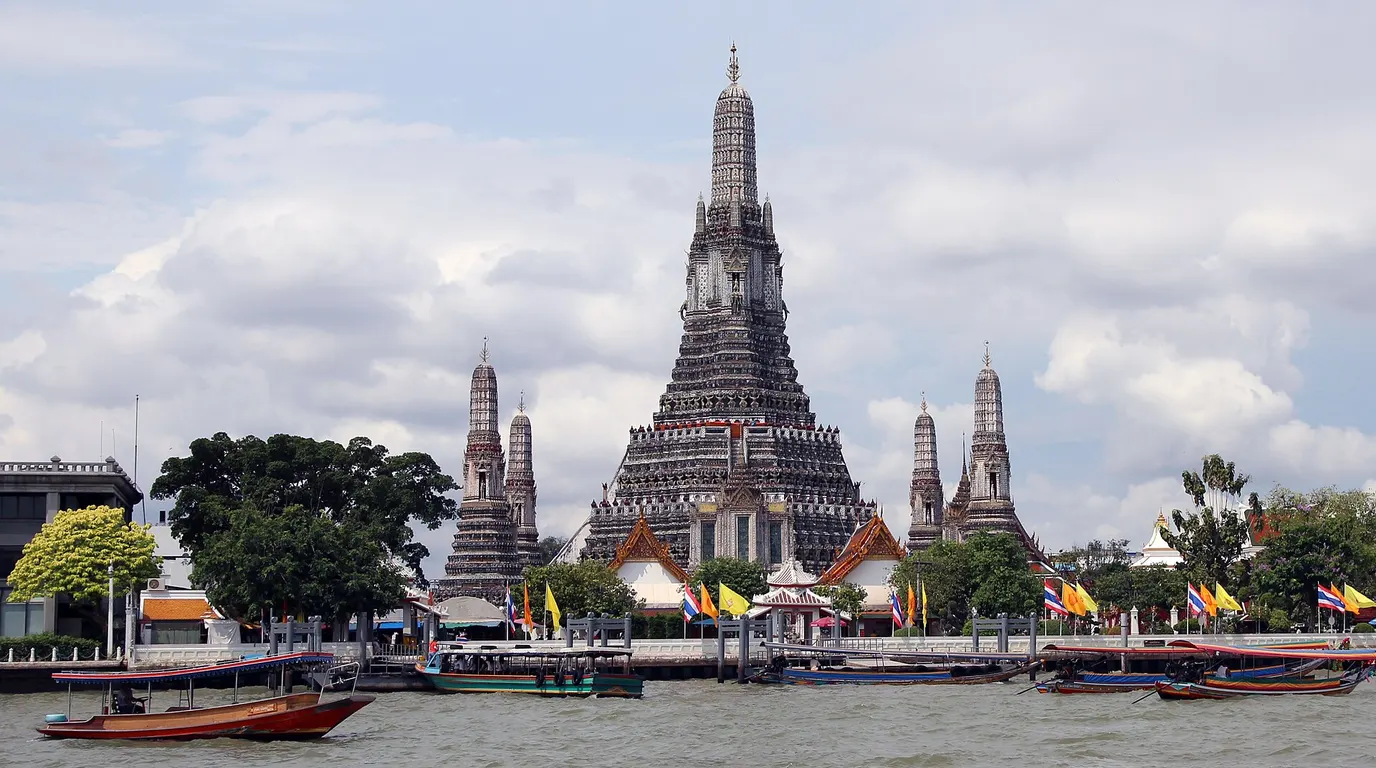
 © Rolf Heinrich, Köln · CC BY 3.0
On this page
Why Thailand?
Advantages
- A low cost of livingDay-to-day costs are far below Hong Kong, with good private hospitals at modest prices.
- Close by, no need to moveAbout 3 hours by direct flight, and the Privilege and LTR visas set no minimum stay.
- Several visa optionsOptions run from the Privilege card to the 10-year LTR, by income, fee or remote work.

Worth weighing up
- Not a migration routeThe Privilege and LTR visas are long-stay permits, not a path to permanent residence or citizenship.
- Remitted foreign income is taxedSince 2024, tax residents pay tax on foreign income remitted into Thailand.
- Foreigners cannot own landYou can buy a condominium, but land must be held through a Thai name or a long lease.

Who is it for?
- You're retired or semi-retired and want to live in Thailand
- You work remotely and want a base in Thailand
- You want a simple long-stay visa without investing
Key facts
- 1How you qualify
- LTR: one of four types (income, assets, pension or skills)
- Privilege: pay the membership fee (from THB 650,000) and pass a background check
- DTV: remote work or Thai cultural activities, with THB 500,000 in the bank
- 2Family who can come
- LTR: spouse and children under 20, up to 4 dependants
- DTV: spouse and children under 20
- Privilege: family arrangements depend on the tier
- 3Settlement and passport
- All three are long-stay visas, not permanent residence or citizenship
- LTR conditions must be kept for the whole visa
- 4How long it takes
LTR
5 years, then 5 more if you still qualify
Privilege
5, 10, 15 or 20 years
DTV
5 years, up to 180 days per entry
✓ Facts checked: 6 Nov 2026
Latest developments
DTV launched
Thailand launched the Destination Thailand Visa, a 5-year multiple-entry visa for remote workers and people joining Thai cultural activities.
Source: Royal Thai Embassy, Washington DC — Destination Thailand Visa (DTV) (posted 13 Jul 2024)
Elite card renamed, new tiers
Thailand Elite became Thailand Privilege with today's Bronze, Gold, Platinum, Diamond and Reserve tiers; older packages were discontinued.
Source: Thailand Privilege Card Co. (state-owned) — Membership packages
LTR 10-year visa launched
The Board of Investment launched the Long-Term Resident visa to attract wealthy and highly skilled foreigners to live in Thailand.
Source: Thailand Board of Investment — Long-Term Resident (LTR) Visa
Thailand Elite card begins
The state-owned Thailand Elite programme began, offering a long-term visa and member services for a fee.
Source: Thailand Privilege Card Co. (state-owned) — Membership packages
Eligibility and family
- LTR wealthy global citizen: US$1M in assets and US$500,000 already invested in Thailand (bonds, a company or property)
- LTR wealthy pensioner: 50 or over with US$80,000 a year passive income; US$40,000–80,000 needs a further US$250,000 invested in Thailand
- LTR work-from-Thailand professional: US$80,000 a year, employed by a listed or established overseas company
- LTR highly skilled professional: working in a Thai target industry on US$80,000 a year (from US$40,000 with a master's degree)
- All LTR applicants need health insurance of at least US$50,000 or US$100,000 in the bank
Family members who can be included
| Family member | Condition |
|---|---|
| Spouse (LTR, DTV) | Can apply for a dependant visa |
| Children under 20 (LTR, DTV) | Can be included; LTR allows up to 4 dependants per holder |
| Family (Privilege) | Depends on the tier; we confirm the current terms at the assessment |
Process and timetable
Step 1
Pick the type
Wealthy global citizen, wealthy pensioner, work-from-Thailand professional or highly skilled professional, each with income, asset or employer rules.
Step 2
Apply to the Board of Investment
Submit income and asset evidence plus health insurance (at least US$50,000) or US$100,000 in the bank; wealthy and pensioner investments must already be made.
Approval
Collect the visa
THB 50,000 per person if collected in Thailand, possibly more abroad. After 5 years, renew for 5 more if you still qualify.
Step 1
Choose a tier
Bronze THB 650,000 (5 years), Gold THB 900,000 (5 years), Platinum THB 1.5M (10 years), Diamond THB 2.5M (15 years); Reserve THB 5M (20 years) is by invitation.
Step 2
Apply and background check
Apply to Thailand Privilege Card Co., pass the background check, then pay the fee.
Approval
Visa and member services
Receive a visa for the membership term, plus member services such as airport assistance.
Step 1
Confirm the purpose
Remote workers, freelancers or digital nomads; or Thai soft-power activities such as Muay Thai, Thai cooking courses or medical treatment.
Step 2
Apply through a mission or e-visa
Submit three months of bank statements each ending at THB 500,000 or more, work or activity evidence and a police certificate; the fee depends on where you apply.
Approval
5 years, multiple entry
Stay up to 180 days per entry.
Government costs and investment
| Item | Amount |
|---|---|
| LTR visa fee (collected in Thailand, per person, 10 years) | THB 50,000 |
| Thailand Privilege: Bronze / Gold (5 years) | THB 650,000 / 900,000 |
| Thailand Privilege: Platinum (10 years) / Diamond (15 years) | THB 1,500,000 / 2,500,000 |
| DTV bank balance needed | THB 500,000 |
The LTR fee can be higher when collected abroad or by e-visa; the DTV fee depends on where you apply. Agent fees and Lighthouse's service fee are extra; we quote our fee in writing after the free assessment.

Thailand · Country snapshot
Basics
- Population
- About 66 million (2024 registered population)
- Chinese population
- About 7–10 million ethnic Chinese (roughly 10–15%), largely integrated into Thai society
- Language
- Thai; English works in tourist areas and business
- Currency
- Thai baht (THB); about HK$1 = 4.2 baht
- Time difference
- 1 hour behind Hong Kong (UTC+7, no daylight saving)
- From Hong Kong
- Direct flights to Bangkok and Phuket, about 2.5–3.5 hours
Tax
- Income tax
- 0%–35% progressive
- Social security
- Employee contribution 5%, capped at THB 750 a month
- Corporation tax
- 20% (with relief for SMEs)
- Consumption tax
- 7% VAT
- Capital gains tax
- Generally taxed as income; individuals are exempt on shares listed on the Thai exchange
- Stamp duty on purchase
- 2% transfer fee and 0.5% stamp duty; resale within 5 years attracts 3.3% specific business tax
- Annual property tax
- Land and buildings tax; owner-occupied homes pay little or nothing, other property from 0.02%–0.3%
- Inheritance tax
- 5%–10% above a THB 100 million exemption
- Worldwide income
- Since 2024, tax residents pay tax on foreign income remitted into Thailand
- Tax residence
- 180+ days in a calendar year
- CRS
- Participates
Living
- Education
- International schools cluster in Bangkok, Chiang Mai and Phuket; state schools teach in Thai
- Healthcare
- Bangkok's private hospitals are good and far cheaper than Hong Kong; expatriates should carry health insurance
- Safety
- Tourist areas are generally fine; the three southern border provinces (Yala, Pattani, Narathiwat) see conflict
- Climate
- Tropical and hot year-round; the rainy season runs May to October
- Citizenship / passport
- Usually permanent residence first (e.g. 3 years on work permits), then 5 years and a Thai language requirement before naturalisation
- Dual nationality
- Thailand allows dual nationality in practice; naturalisation does not require renouncing your original nationality
- Passport access
- About 80 destinations (Henley 2026, ranked 66th)
Tax figures are a general guide, not tax advice; your position depends on your circumstances.
Sources · Checked 13 Nov 2026
- Department of Provincial Administration, Thailand — Population registration
- Revenue Department, Thailand — Taxes
- Ministry of Public Health, Thailand
- Ministry of Education, Thailand
- Ministry of Foreign Affairs, Thailand
- Institute for Economics & Peace — Global Peace Index 2026
- Henley & Partners — Henley Passport Index 2026

Want to know if this programme fits you?
Tell us your situation and a consultant will compare this programme with your other options.
Things to watch
LTR conditions must be kept
Investments, income, bank balances and insurance must be kept up for the whole visa, or renewal can be affected.
The DTV is not a work visa
The DTV lets you work remotely for overseas employers or clients; it is not a permit to work for a Thai company.
Not a route to permanent residence
All three are long-stay visas; Thai permanent residence is a separate application with limited places.
Frequently asked questions
How do I choose between the three?
If you meet the income or asset rules, the LTR runs longest for the lowest fee; for simplicity without proving income, the Privilege card; for remote workers on a smaller budget, the DTV.
What suits retirees?
At 50 or over with US$80,000 a year passive income, the LTR pensioner type; with US$40,000–80,000, a further US$250,000 investment in Thailand is needed. The Privilege card and retirement visa are other options.
Can my family come?
The LTR and DTV cover a spouse and children under 20, with up to 4 dependants on the LTR; Privilege family arrangements depend on the tier.
Can I work in Thailand?
LTR holders can get a digital work permit; the DTV is only for remote work for overseas employers or clients.
Do I need 90-day reporting?
LTR holders report once a year instead of every 90 days and need no re-entry permit; other visas follow the immigration bureau's reporting rules.
Do these lead to permanent residence or citizenship?
Not automatically. All three are long-stay visas; Thai permanent residence is a separate application with limited places.
Compare with
Sources · 3 items · Facts checked: 6 Nov 2026
- OfficialThailand Board of Investment — Long-Term Resident (LTR) Visa
- OfficialThailand Privilege Card Co. (state-owned) — Membership packages
- OfficialRoyal Thai Embassy, Washington DC — Destination Thailand Visa (DTV) (posted 13 Jul 2024)
Official sources take priority; secondary sources are used only to fill gaps and are replaced with official ones when we next check.