
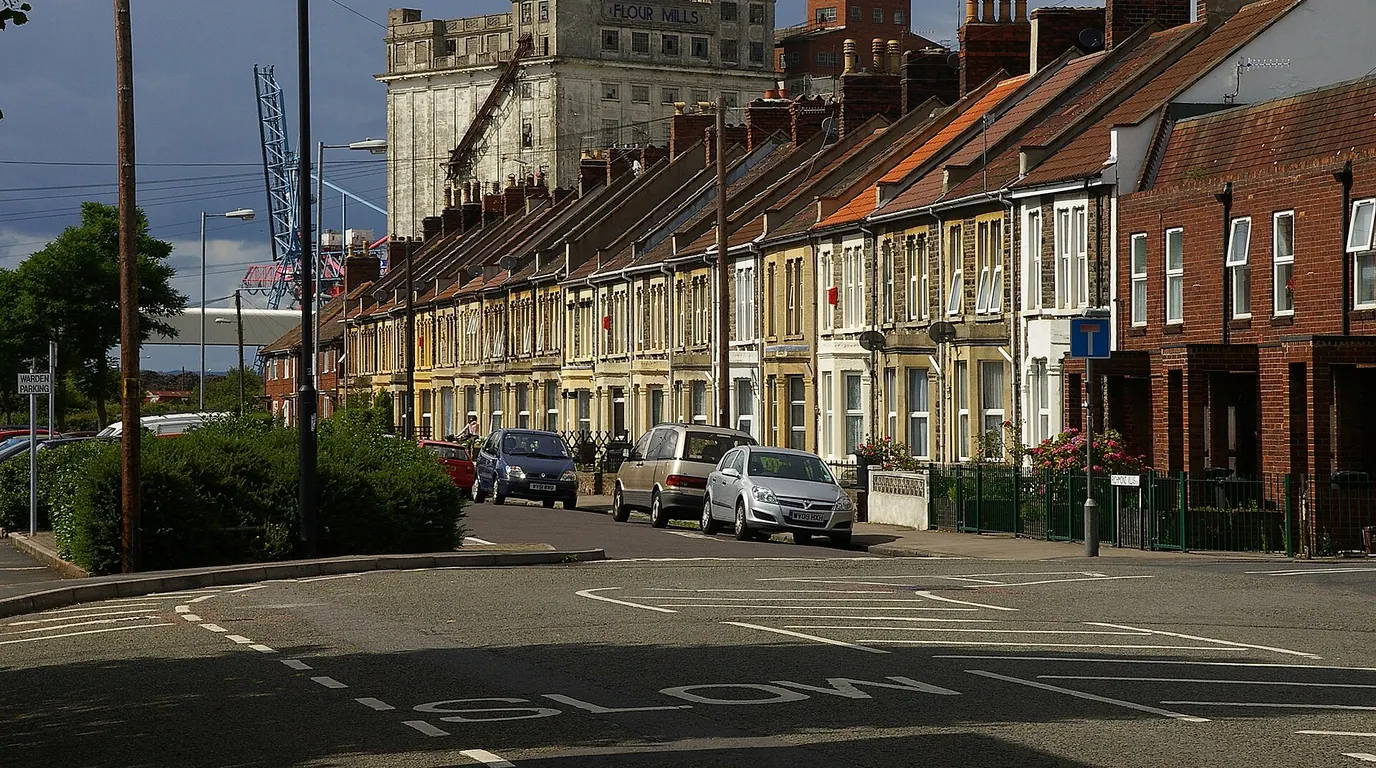
 © mattbuck · CC BY-SA 3.0
On this page
Why the UK?
Advantages
- A route with no job offerThe BN(O) visa needs no employer: settle after 5 years, then citizenship 12 months later.
- Free state schoolsState schools are free; university fees depend on immigration status.
- Public healthcareVisa holders who pay the health surcharge can use the NHS.
- Dual nationality allowedThe UK allows dual nationality, and a British passport reaches 183 destinations visa-free (Henley 2026).

Worth weighing up
- Higher taxesIncome tax reaches 45% (48% in Scotland). New arrivals can exempt foreign income for 4 years; after that, worldwide income is taxed.
- Settlement rules under reviewThe government has consulted on tougher settlement rules; BN(O) stays at 5 years, but an income condition is undecided.
- Distance and weather8 hours behind Hong Kong (7 in summer) and 13 to 14 hours' flight; winters are cool and wet.

Who is it for?
- You want to move the whole family to the UK without a job offer
- You want your children educated in the UK, through to university
- You want to rebuild your career or work in the UK
Key facts
- 1How you qualify
- You hold BN(O) status and are 18 or over
- Your partner holds it: apply with them as a family member
- A parent holds it: adult children born on or after 1 July 1979 apply on their own
- No job offer, and no English test for the visa
- 2Family who can come
- Your spouse or partner
- Children and grandchildren under 18
- Adult relatives who need long-term care (such as parents)
- 3Settlement and passport
- Settlement: 5 years in the UK, no more than 180 days away in any 12 months
- Settlement: English (B1 now; the government has announced a rise to B2) and the Life in the UK test
- Settlement (new rules): refused if you have a UK criminal record or owe the government money (such as NHS debt or tax)
- Passport: apply for citizenship 12 months after settlement, usually no more than 450 days away in 5 years; decided on good character and other requirements
- 4How long it takes
Visa decision
About 12 weeks
Settlement
Year 5
British passport
Year 6
✓ Facts checked: 4 Nov 2026
Latest developments
New settlement rules: BN(O) keeps 5 years, but English rises to B2
The Home Office published its final Earned Settlement framework. The standard qualifying period becomes 10 years, with BN(O) kept as an exception at 5 years. BN(O) applicants must still meet the new general requirements: English rises from B1 to B2; any adult with a UK criminal record will be refused; and no applicant may owe the government money (including NHS debt, tax and National Insurance). The rules are not yet in force. Law firm Lewis Silkin reports they will be laid in stages from December 2026 and implemented during 2027, with B2 expected for applications from 26 March 2027. Hong Kong Watch says the Home Office confirmed BN(O)s are exempt from the £12,571 income threshold.
First large group of BN(O) holders settles
Home Office figures to June 2026: 187,552 BN(O) visas granted from outside the UK since the route opened, plus 54,284 in-country grants. In the year to June 2026, 38,373 BN(O) visa holders were granted settlement, up from 587 the year before, as the first 2021 arrivals reached 5 years.
Source: Home Office — Immigration system statistics, year ending June 2026 (27 Aug 2026)
Adult children born on or after 1 July 1979 now eligible
Adult children of BN(O) status holders previously had to be born on or after 1 July 1997 to apply on their own. From this date, adult children who were under 18 at the 1997 handover (born on or after 1 July 1979) can apply independently, whether or not they hold BN(O) status themselves. The 'Household Member' category was renamed 'Adult Child'.
Source: Home Office — Hong Kong British National (Overseas) route, caseworker guidance v15.0
UK says BN(O) settlement stays at B1 English (superseded in November)
From 26 March 2027 the UK raises the English level for settlement on some routes from B1 to B2, and at the time said this did not apply to BN(O). The final framework of 2 November 2026 changed this: BN(O)s will also need B2.
Source: Hong Kong Watch — BN(O) visa not impacted by language requirement changes (6 Mar 2026)
Settlement consultation: BN(O) left out of the longer wait
The Home Office published 'A Fairer Pathway to Settlement', proposing to raise the standard qualifying period from 5 to 10 years. It gave BN(O)s a 5-year reduction, so they can still settle after 5 years, and said this was not subject to consultation. The consultation closed on 12 February 2026.
Source: Home Office — A Fairer Pathway to Settlement, CP 1448 (20 Nov 2025)
Immigration Health Surcharge raised sharply
For applications from this date, the standard surcharge rose from £624 to £1,035 a year and the lower rate (including under-18s) from £470 to £776. For a 5-year visa, one adult now pays £5,175 instead of £3,120.
Source: Free Movement — Immigration health surcharge increases with effect from 6 February 2024
Adult children can apply without their parents
From this date, adult children aged 18 or over, born on or after 1 July 1997, with at least one BN(O) parent, could apply on their own, without being part of their parents' household or applying at the same time. Their own partner and children could apply with them.
Source: Home Office — Statement of changes in Immigration Rules HC 719 (18 Oct 2022)
BN(O) visa opens
The BN(O) visa opened for applications, letting status holders and their families live, work and study in the UK without a sponsor. Adult children born on or after 1 July 1997 could only apply with their parents, as 'Household Members'.
Source: Home Office in the media — Media factsheet: Hong Kong BN(O) Visa route (24 Feb 2022)
Hong Kong stops recognising the BN(O) passport
The Hong Kong government announced that from this date the BN(O) passport cannot be used for immigration clearance in Hong Kong or as proof of identity. Residents use their HKSAR passport or permanent identity card instead. This does not affect applying for the UK visa.
Source: HKSAR Government — Follow-up on China's countermeasures on the BN(O) passport (29 Jan 2021)
UK announces the BN(O) visa
After the national security law took effect in Hong Kong in June 2020, the Home Office published a policy statement creating a new immigration route for BN(O) citizens and their dependants, with applications planned from January 2021.
Source: GOV.UK — Hong Kong BN(O) Visa: policy statement (22 Jul 2020)
- Ordinarily resident in Hong Kong (or in the UK or Crown Dependencies if applying from inside the UK)
- A tuberculosis (TB) test certificate, unless exempt
Family members who can be included
| Family member | Condition |
|---|---|
| Spouse or civil partner | The marriage or civil partnership must be recognised in the UK |
| Unmarried partner | Living together for at least 2 years when they apply; if you cannot live together, in a relationship for at least 2 years with proof of ongoing commitment |
| Children and grandchildren under 18 | Usually apply with both parents and normally live with you; exceptions include where one parent has sole responsibility |
| Adult dependent relatives (such as parents or grandparents) | Need long-term help with everyday tasks because of illness, disability or age, and cannot get or afford that care in Hong Kong |
Process and timetable
Before applying
Check eligibility, choose a length, prepare documents
Confirm how each family member qualifies and compare the total cost of 30 months and 5 years. Prepare BN(O) passport or status evidence, proof of living in Hong Kong, relationship and funds evidence, and a TB test certificate.
Year 0
Apply online and move
Apply online, pay the visa fee and health surcharge, and give biometrics as instructed. If you apply from outside the UK, wait for approval before you travel.
After arrival
Settle in
Find a home, enrol the children in school, register with a GP and sort out UK tax.
Month 30
Extend (30-month visa only)
Holders of the 30-month visa extend once; the 5-year visa needs no extension.
Year 5
Apply to settle (ILR)
Pass the Life in the UK test and meet the English requirement, then apply online to settle. Applications are decided under the rules in force at the time, which may by then require B2.
Year 6
Apply for citizenship
Apply online for citizenship, attend the ceremony once approved, then apply for a British passport.
Document checklist
Main applicant
- A valid passport or travel document showing your identity and nationality
- Proof that you live in Hong Kong or the UK, with up to 3 documents showing your home address
- Proof you have enough money to support yourself and your family
- A tuberculosis (TB) test certificate if you have lived in Hong Kong for the past 6 months and apply from outside the UK; it must be under 6 months old
- Certified translations of any documents not in English
Family members
- Proof of the relationship to the main applicant
- Their own passport or travel document, and a TB certificate where needed
- Family members other than a partner, a child under 18 or an adult dependent relative must apply within 2 days of you

| Source of funds | Proof needed |
|---|---|
| Savings | Bank statements or similar showing enough for 6 months in the UK; at least one document dated no more than 31 days before you apply |
| Already in the UK for 12 months | Normally no proof of funds needed |
Government costs and investment
What will the whole family pay?
Choose your family and visa length to see UK government fees from the visa to citizenship.
Adults (18 or over)
Children under 18
Visa length
- Year 0: visa fee and health surcharge
- £15,085
- Year 5: settlement and Life in the UK test
- £9,778
- Year 6: adult citizenship and ceremony
- £3,678
- Year 6: children registered as citizens
- £1,000
- Total of the government fees listed
- £29,541
Included
- Visa fees and the health surcharge (£1,035 a year per adult, £776 per child)
- Settlement fee (£3,226 each) and the adults' Life in the UK test (£50)
- Adult citizenship (£1,709) and ceremony (£130)
- Registering children under 18 as citizens (£1,000 each)
Not included (extra)
- English test fees needed for settlement
- The £130 ceremony fee if a child turns 18 during the application
- Translations, travel and professional fees
- Any fee changes from April 2027
A child who turns 18 along the way pays the adult health surcharge, takes the test and naturalises rather than registers; tell an adviser your children's ages and we'll recalculate.
Based on the Home Office fees table of 8 October 2026 (checked 8 November 2026); fees usually change each April.
WhatsApp this to an adviser| Item | Amount |
|---|---|
| Visa fee (30 months / 5 years) | £206 / £285 per person |
| Health surcharge, adult (30 months / 5 years) | £2,587.50 / £5,175 |
| Health surcharge, under 18 (30 months / 5 years) | £1,940 / £3,880 |
| Settlement application (year 5) | £3,226 per person |
| Life in the UK test | £50 per attempt |
| Citizenship application and ceremony (year 6) | £1,709 + £130 per adult |
UK government fees from the Home Office table of 8 October 2026; they usually change each April. Children under 18 become citizens by registration, at a separate fee. TB tests, translations and Lighthouse's service fee are extra; we quote our fee in writing after the free assessment.

UK · Country snapshot
Basics
- Population
- About 69.5 million (mid-2025)
- Chinese population
- About 500,000, around 0.8% (2021 census, before most BN(O) arrivals)
- Language
- English
- Currency
- Pound sterling (GBP)
- Time difference
- 8 hours behind Hong Kong (7 in summer)
- From Hong Kong
- Direct to London, about 13–14 hours
Tax
- Income tax
- 0%–45% progressive (England; £12,570 allowance; Scotland up to 48%)
- Corporation tax
- 19%–25% (19% under £50k profit, 25% over £250k)
- Capital gains tax
- 18% or 24% (£3,000 annual exemption)
- Stamp duty on purchase
- 0%–12% progressive; up to 17% for second homes; +2% for non-residents
- Annual property tax
- Council tax, a set charge by valuation band
- Inheritance tax
- 40% above £325,000; since April 2025, worldwide assets count after 10 of 20 years' residence
- Worldwide income
- Yes; new arrivals (not UK resident for 10 years) can exempt foreign income and gains for 4 years (FIG regime)
- Tax residence
- Statutory Residence Test: 183+ days in a tax year makes you resident; below that, it depends on past residence, a UK home, work and family ties
- CRS
- Participates
Living
- Education
- State schools free; university fees depend on immigration status
- Healthcare
- NHS care, open to visa holders who pay the Immigration Health Surcharge
- Safety
- Global Peace Index 2026: 39th of 163
- Climate
- Temperate maritime: cool, wet winters and mild summers
- Dual nationality
- Allowed by the UK
- Passport access
- 183 destinations (Henley 2026)
Tax figures are a general guide, not tax advice; your position depends on your circumstances.
Sources · Checked 29 Oct 2026
- ONS — Population estimates for the UK: mid-2025 (1 Oct 2026)
- PwC Worldwide Tax Summaries — United Kingdom, individual and corporate taxes (reviewed 23 Jul 2026)
- PwC Worldwide Tax Summaries — United Kingdom, individual residence
- Wikipedia — East Asians in the United Kingdom (2021/22 census figures)
- Institute for Economics & Peace — Global Peace Index 2026
- Henley Passport Index 2026 (via Wikipedia)

Want to know if this programme fits you?
Tell us your situation and a consultant will compare this programme with your other options.
Things to watch
People already in the UK are judged under the new rules too
The Home Office says that, unless transitional rules apply, settlement applications are decided under the rules in force at the time. BN(O) has no exemption from B2 English or the new criminality rule, under which even a non-custodial outcome such as a fine can lead to refusal. If you will apply in 2027 or later, start on B2 English early and make sure you owe nothing to the NHS, HMRC or other government bodies.
Citizenship rules may change too
The Home Office says it will look at citizenship after the settlement reforms, though changing the British Nationality Act needs new legislation. The current rule, applying 12 months after settlement, has not changed; we will update this page if it does.
No more than 180 days away in any 12 months
A long stay in Hong Kong for work or family can break your continuous residence, restarting the clock for settlement (with limited exceptions) and delaying citizenship. Count your days before you go.
You may not be able to withdraw your MPF early
The MPFA says a BN(O) passport or its visa cannot support early MPF withdrawal on permanent-departure grounds. A survey found most applicants who already had UK settlement, even citizenship, were still refused. Plan on your MPF possibly staying locked until 65.
Frequently asked questions
Do I need an English test for the BN(O) visa?
Not for the visa itself. When you apply to settle, applicants aged 18 to 64 need the required English level and the Life in the UK test. It is B1 now, but on 2 November 2026 the Home Office said BN(O)s will also need B2, expected from 2027.
Should I choose 30 months or 5 years?
Both lead to settlement after 5 years. The 5-year visa costs more upfront, mainly the health surcharge, but avoids an extension and any rule changes in between. The 30-month option spreads the cost over two payments.
Can my adult children apply on their own?
Yes. Under Home Office guidance, adult children of a BN(O) status holder born on or after 1 July 1979 and aged 18 or over can apply independently of their parents.
How much money do I need to show?
There is no fixed amount: you must show enough for 6 months' housing and living costs. The UK government's examples are about £2,000 for a single adult and about £3,100 for a couple with one child. If you have lived in the UK for 12 months you usually do not need to show funds.
What should I sort out first after arriving?
Usually four things: apply for a National Insurance number (needed for work and tax), register with a GP, apply to your local council for state school places, and open a bank account. School places are allocated by the council where you live, so look at nearby schools before choosing a home.
Will the BN(O) 5-year route be scrapped?
No. The Home Office's final framework of 2 November 2026 confirms BN(O)s keep the 5-year route to settlement. BN(O) applicants must still meet the new B2 English, criminality and government-debt requirements, expected to take effect during 2027; we update this page as they do.
Compare with
Related news
Sources · 26 items · Facts checked: 4 Nov 2026
- OfficialHome Office — A Fairer Pathway to Settlement: Government Response to the Consultation, CP 1707 (2 Nov 2026)
- OfficialHome Office — A Fairer Pathway to Settlement, CP 1448 (20 Nov 2025)
- OfficialHome Office — Immigration system statistics, year ending June 2026 (27 Aug 2026)
- OfficialHome Office — Settlement grants, year ending June 2026 (27 Aug 2026)
- OfficialHome Office — Statement of changes in Immigration Rules HC 719 (18 Oct 2022)
- OfficialHome Office in the media — Media factsheet: Hong Kong BN(O) Visa route (24 Feb 2022)
- OfficialGOV.UK — Hong Kong BN(O) Visa: policy statement (22 Jul 2020)
- OfficialHKSAR Government — Follow-up on China's countermeasures on the BN(O) passport (29 Jan 2021)
- SecondaryLewis Silkin (law firm) — Home Office sets out revised earned settlement framework (3 Nov 2026)
- SecondaryHong Kong Watch — Response to the Earned Settlement policy paper (2 Nov 2026)
- OfficialGOV.UK — Visa processing times: applications outside the UK (updated 9 Sep 2026)
- OfficialGOV.UK — BN(O) visa: your family members
- OfficialGOV.UK — BN(O) visa: documents you'll need to apply
- OfficialGOV.UK — Check if you can become a British citizen
- OfficialGOV.UK — British National (Overseas) visa: how much it costs
- OfficialHome Office — Immigration and nationality fees (8 October 2026)
- OfficialImmigration Rules — Appendix Continuous Residence (updated 29 Oct 2026)
- OfficialGOV.UK — Apply for citizenship if you have indefinite leave to remain
- OfficialGOV.UK — Apply for a National Insurance number
- OfficialNHS — How to register with a GP surgery
- OfficialGOV.UK — Apply for a school place
- OfficialMPFA — Statement on early withdrawal on permanent departure grounds (17 Apr 2023)
- SecondaryHong Kong Watch — Hong Kongers with settled status in the UK still denied access to their MPF savings (25 Aug 2026)
- OfficialHome Office — Hong Kong British National (Overseas) route (caseworker guidance)
- SecondarySCMP — Hongkongers on BN(O) pathway won't face tougher English test (Mar 2026)
- SecondaryHong Kong Watch — BN(O) not impacted by language requirement changes (6 Mar 2026)
Official sources take priority; secondary sources are used only to fill gaps and are replaced with official ones when we next check.